 Zeynep Aziz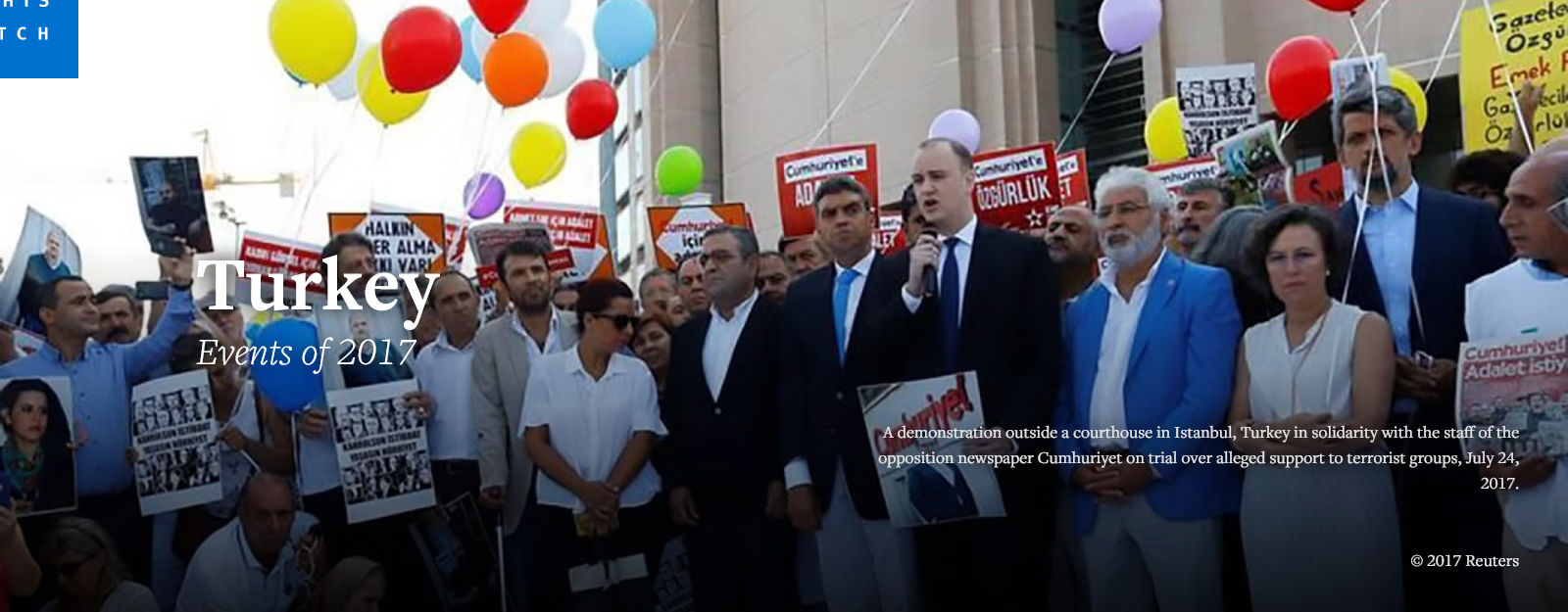
A year of mass dismissals, jailed journalists, prosecuted human rights defenders, and a constitutional overhaul that international bodies warn lacks “necessary checks and balances.”
Date: December 2017 · Region: Turkey
Turkey underwent the most significant transformation of its political institutions in decades during 2017, as a slim-margin April referendum switched the country to a presidential system of governance under a state of emergency imposed after the July 2016 attempted coup. The new system consolidates executive power, diminishes parliament, and places most judicial appointments under presidential control — prompting warnings from international bodies that it lacks sufficient checks and balances against abuse.
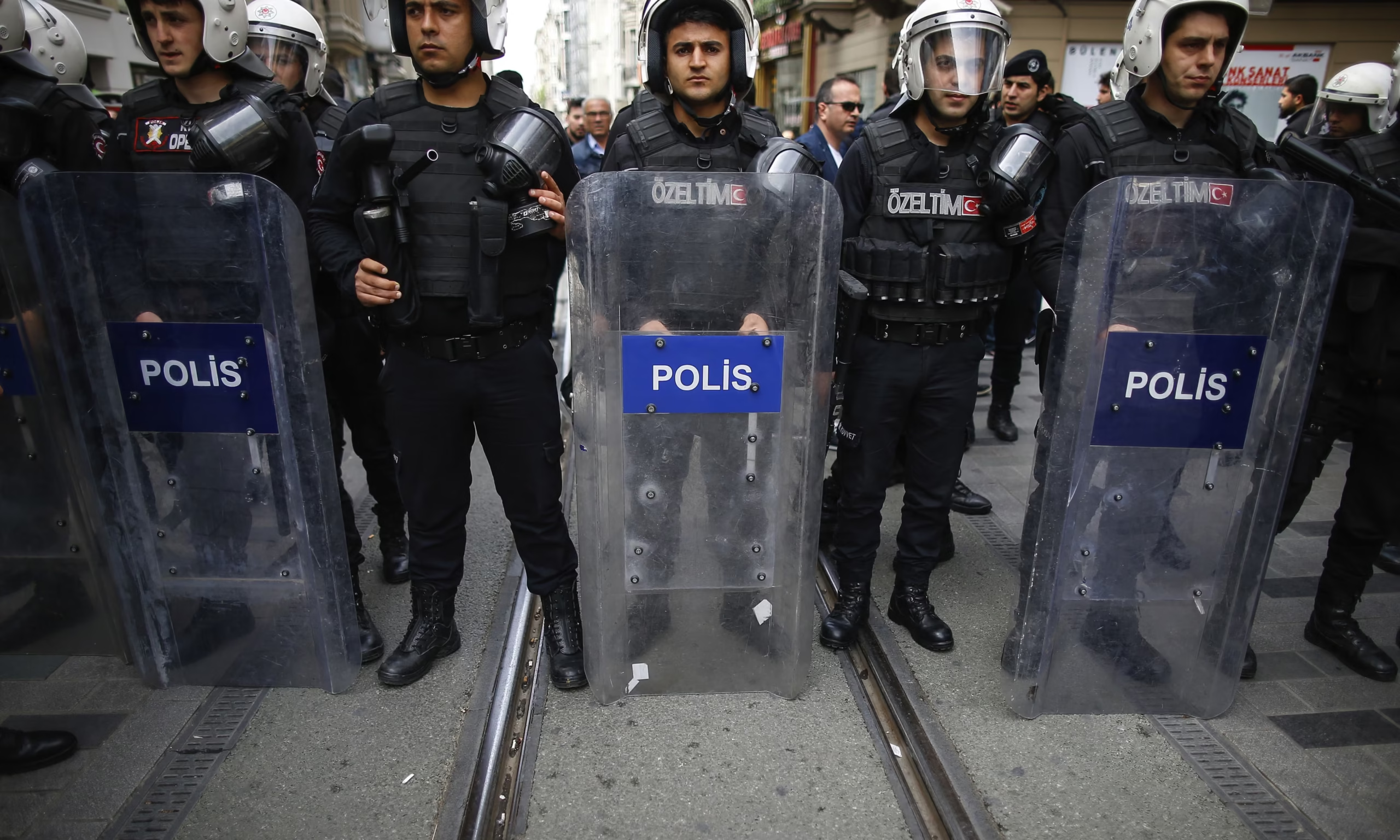
Under emergency measures in place since July 2016, the cabinet can pass decrees without parliamentary scrutiny or appeal to the constitutional court. More than 110,000 public officials have been dismissed without due process, and hundreds of media outlets, associations, and educational establishments remain shut down, their assets confiscated without compensation. At least 50,000 people have been remanded to pretrial detention on terrorism charges, many accused of links to the movement of U.S.-based cleric Fethullah Gülen, often without compelling evidence of criminal activity.
Press Freedom at a Breaking Point
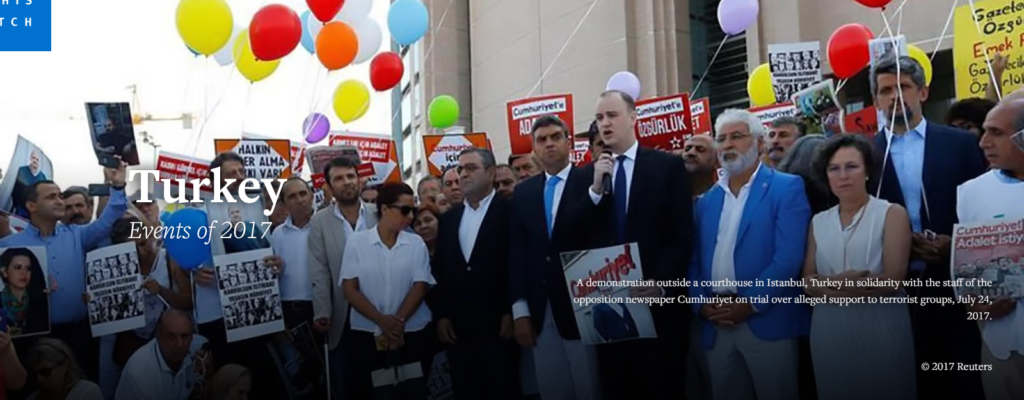
Turkey remains the world leader in jailing journalists, with around 150 behind bars at time of writing. Several major, politically motivated trials began in 2017 — including of 19 staff from the Cumhuriyet newspaper and 31 journalists from Zaman — where the evidence consisted of writing and reporting that did not advocate violence. In a striking case, a court ordered the release of 21 detained journalists in March, only for the decision to be reversed after public criticism from a pro-government journalist; the three ruling judges were subsequently suspended.
Online expression was similarly curtailed. An April court order upheld the blocking of the entire Wikipedia website, and Turkey accounted for 45 percent of global requests to Twitter to remove content in the first half of 2017.
Crackdown Extends to Defenders and Lawyers
The crackdown reached human rights defenders in 2017. Taner Kılıç, chair of Amnesty International Turkey, was detained in June on allegations tied to an encryption app that two expert reports showed was never downloaded on his phone. In July, 10 defenders — including Amnesty Turkey director İdil Eser — were detained during a routine Istanbul meeting. Over 500 lawyers have been jailed pending trial, and more than 1,000 prosecuted.
“The arrests of human rights defenders in Turkey amount to a ‘witch-hunt,’ and the UN Human Rights Council must address the deterioration of human rights in the country.” — United Nations human rights experts, July 2017
Custody Abuses and Kurdish Opposition Targeted
Widespread reports of torture and ill-treatment in police custody marked a reversal of long-standing progress, despite the government’s stated zero-tolerance policy. Credible reports also documented enforced disappearances of men dismissed from civil service jobs. Meanwhile, up to 13 pro-Kurdish HDP deputies were held in prolonged pretrial detention, and the government took control of 89 municipalities won by pro-Kurdish parties, jailing at least 70 elected co-mayors pending trial.
Refugees and International Fallout
Turkey continues to host the world’s largest refugee population — 3.4 million people, mostly from Syria — yet at least 380,000 Syrian refugee children remain out of school amid exploitative labor conditions. Internationally, the EU-Turkey relationship deteriorated further, with the European Parliament and some member states calling for a suspension of the accession process. The Council of Europe reinstated full monitoring of Turkey after 13 years, and both the Council of Europe Commissioner for Human Rights and the UN special rapporteur on freedom of expression published reports documenting deeply problematic restrictions on speech and media.
110,000+
Public officials dismissed without due process since July 2016
150
Journalists jailed — the highest of any country
50,000+
People remanded to pretrial detention on terrorism charges
3.4M
Refugees hosted — the world’s largest refugee population
As the presidential system comes fully into force following elections in 2019, the trajectory of Turkey’s democracy — and the responsiveness of its international partners — will hinge on whether the institutions of accountability can be rebuilt from the wreckage of the state of emergency.
Staff Correspondent
Human Rights Desk,
Notes for Editors
- Figures drawn from documented human rights reporting on Turkey covering 2017, including dismissals under emergency decree, journalist detentions, and refugee enrollment data.
- The April 2017 referendum was conducted under a state of emergency and in an environment of heavy media censorship, with journalists and pro-Kurdish parliamentarians in jail.
- An ad hoc commission to review emergency-decree decisions had received over 102,000 applications by time of writing but had not yet begun issuing decisions.
- This statement is provided for informational and educational purposes. For inquiries, contact the Human Rights Desk.