 Zeynep Aziz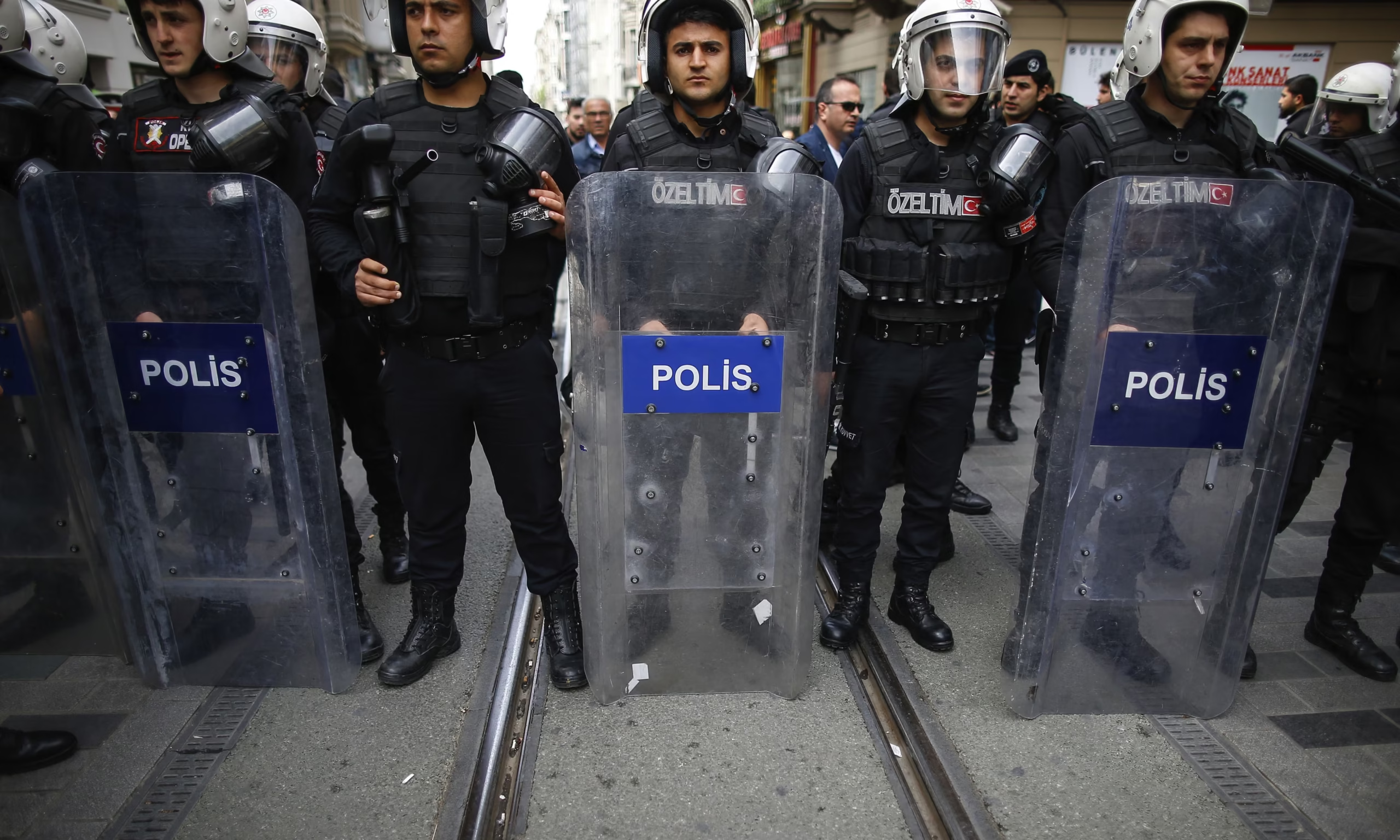
Laws enacted after the 2016 coup attempt have been lifted, but Erdoğan appears determined to continue the pursuit of opponents — with a new anti-terrorism bill poised to keep many emergency powers in place.
By Staff CorrespondentİSTANBUL, July 19, 2018 · 6 min read
İSTANBUL — Turkey’s two-year state of emergency came to an end at midnight on Wednesday, but as trials of dissidents and journalists continue, human rights campaigners have warned that Ankara must do far more to reverse what they call a “suffocating” crackdown on free speech.
Critics say the state of emergency — in place since a failed coup attempt in July 2016 that killed 250 people and wounded 1,400 — has been used to detain opponents of President Recep Tayyip Erdoğan and his government for lengthy periods without trial, to intimidate dissidents, and to prosecute media outlets.
More than 120,000 people in the police, military, academia, media, and civil service have been detained or dismissed from their jobs over alleged links to Fethullah Gülen, an exiled preacher based in the United States whose supporters Ankara blames for the coup.
“The lifting of the state of emergency alone will not reverse this crackdown. What is needed is systematic action to restore respect for human rights, allow civil society to flourish again and lift the suffocating climate of fear that has engulfed the country.” — Fotis Filippou, Amnesty International’s deputy director for Europe
The Turkish government has said it will not seek a renewal of the state of emergency, allowing it to lapse two years after it was imposed and just days after Erdoğan was sworn in as president for a fresh five-year term with extraordinary new powers narrowly approved in a referendum last year.
A Judiciary Realigned
Critics say the use of emergency powers went well beyond Gülenists linked to the coup. About a quarter of Turkey’s judges have either been dismissed or detained — a vast realignment of the judiciary that has prompted outrage and concerns that it is no longer independent.
Thousands have been tried, with many sentenced to life, for involvement in the coup. A hundred people have been extradited to Turkey at the behest of the country’s intelligence service, the MİT.
120,000+
People detained or dismissed from their jobs since the 2016 coup
250
People killed in the failed July 2016 coup attempt
120+
Journalists imprisoned — the highest of any country
25%
Share of Turkey’s judges dismissed or detained
Tensions With Western Allies
The crackdown has also increased tensions with Western allies such as the European Union and the United States. On Wednesday, a court in the city of İzmir ruled for the continued detention of Andrew Brunson, an American pastor accused of having Gülenist links — a move that could prompt congressional sanction and that was described by an official at the U.S. Commission on International Religious Freedom as a “mockery of justice.”
Erdoğan’s ruling Justice and Development (AK) party has tabled a controversial anti-terrorism bill that will retain some of the state of emergency measures. One provision allows local governors to impose curfews or make areas off-limits to the public, making it easier to ban demonstrations.
The World’s Biggest Jailer of Journalists
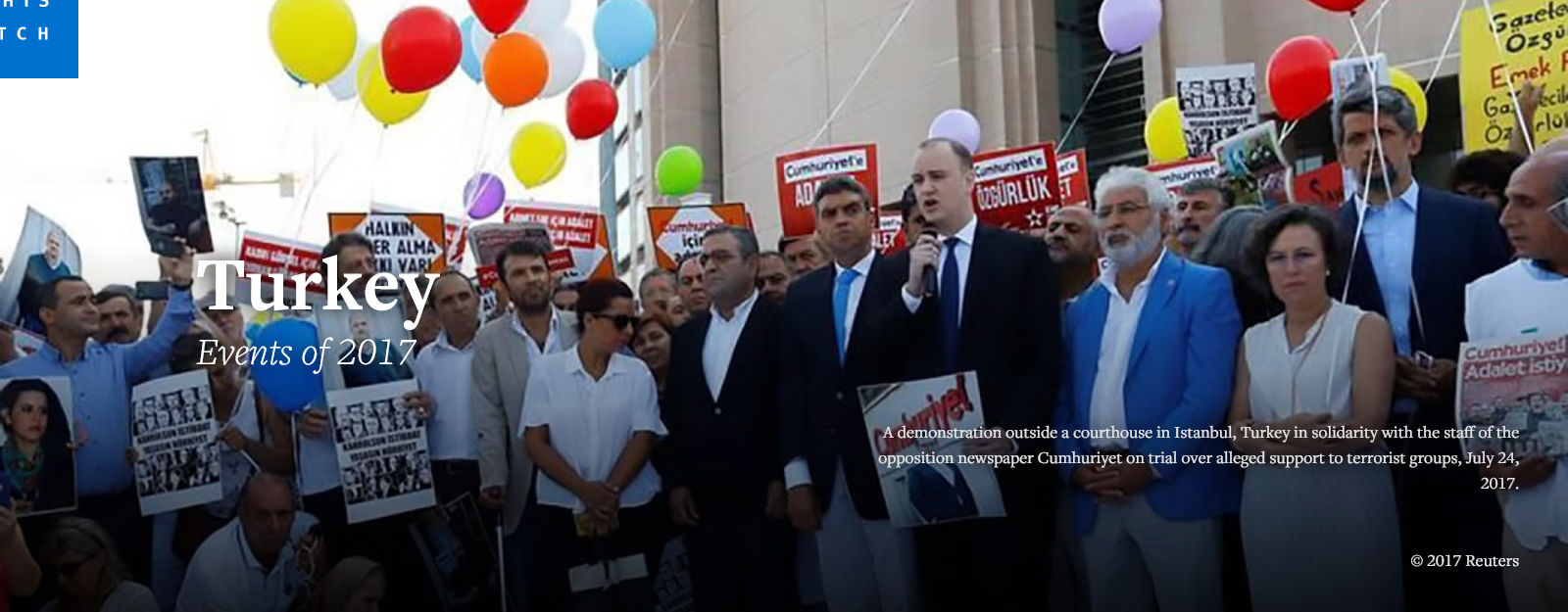
The government also appears determined to continue its prosecutions of journalists and opponents. Turkey is the world’s biggest jailer of journalists, ahead of China and Egypt, with more than 120 imprisoned since the coup attempt.
Cumhuriyet journalists have been prosecuted in numerous court cases, with some — including the current editor-in-chief — appealing against convictions of up to seven-and-a-half years in jail. Erdoğan’s son-in-law and finance minister, Berat Albayrak, is also suing the journalists over their reporting on offshore investments listed in the Paradise Papers, a move that the advocacy group Reporters Without Borders condemned as threatening the survival of independent media outlets reporting on corruption.
“Independent media outlets are fewer now than the fingers on one hand. Journalism is our job, so we have to do it in all conditions, even in the face of such duress and injustice.” — Pelin Ünker, economy correspondent at Cumhuriyet
“Because now in the new system all state power is held by President Erdoğan, there is no need for emergency law,” said Ünker, who is being sued over her reporting on the former prime minister Binali Yıldırım’s sons’ stake in offshore shipping companies, revealed in the Paradise Papers.
‘The Job Is Almost Complete’
The crackdown appeared to have barely slowed even as the end of the state of emergency approached. A day before Erdoğan was sworn in, another 18,600 public servants were dismissed over alleged links to terror groups, and on Tuesday academics who had signed a petition calling for a peaceful resolution of the conflict with Kurdish separatists were sentenced to prison.
Kemal Kılıçdaroğlu, leader of the largest opposition bloc, the Republican People’s Party (CHP), vowed in a party congress to challenge what he described as a “dictatorship” and one-man rule. But on Wednesday the government said it was launching an investigation against Kılıçdaroğlu for insulting the president — an allegation frequently used to intimidate critics — over a cartoon mocking Erdoğan shared on social media.
The continued prosecutions offer a hint that, even though Erdoğan is secure in his control of the state’s levers of power and authority, there will be little immediate relief for dissidents.
“I think the state of emergency has served its purpose, both politically and practically. The job is almost complete. Hundreds of thousands purged. Some Gülenists, apparently, but many others not. Universities, bureaucracy, media, etc, largely subdued.” — Selim Can Sazak, Turkey expert and adjunct fellow at the Century Foundation
In Context — How Turkey Got Here
Jul 15, 2016
Failed coup attempt kills 250 and wounds 1,400; state of emergency declared.
Apr 2017
Narrow referendum approves a presidential system, greatly expanding Erdoğan’s powers.
Jul 2018
Erdoğan sworn in for a new five-year term; 18,600 more public servants dismissed.
Jul 18, 2018
State of emergency lapses at midnight; AK party tables anti-terrorism bill retaining emergency powers.